From Studio Portraits to the Fan Magazine
Trace how studio portraits moved into fan magazines and learn to read the captions, layouts, and publicity choices that shaped a performer’s public image.
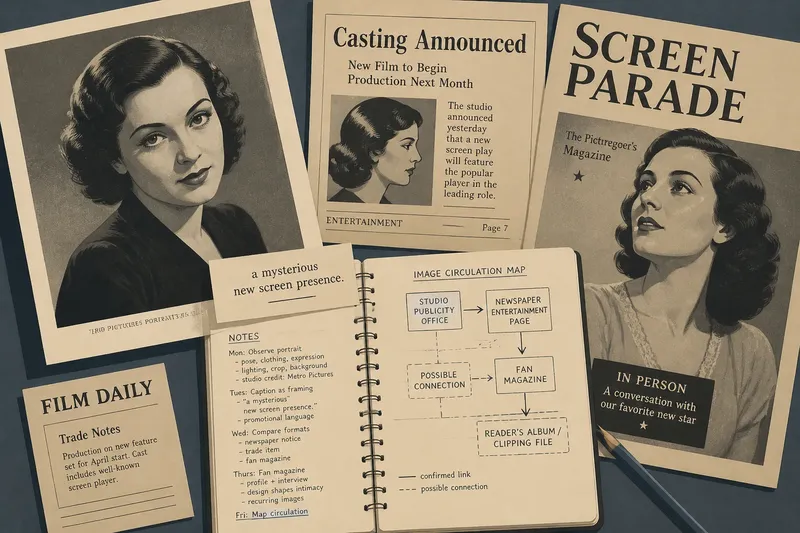
Studio portraits changed meaning as they moved from publicity offices into newspapers and fan magazines. To trace that journey, follow an imagined performer’s printed image across a week of reading, noting how captions, interviews, and page design framed the person for readers.
Keep a notebook or document open. Record what each item shows, what it claims, and what it leaves uncertain; that separation helps distinguish a public image from a performer’s private life.
Monday: Read the portrait
Begin with a studio portrait: a carefully made photograph intended to present a performer clearly and attractively. Look beyond whether it seems glamorous. Note the pose, clothing, expression, lighting, crop, and background. Each choice directs attention. A plain backdrop can make a face feel direct; a setting or prop can suggest a screen persona without explaining the performer’s life.
Write down what is visible before interpreting it. “The performer faces the camera, wears a dark jacket, and is framed from the shoulders up” is an observation. “The performer is naturally serious” is an inference. Keeping these separate helps you see how publicity supplies material for a story while leaving much of that story to the viewer.
Inspect the printed surroundings, too. Is there a studio credit, caption, name, or short description? Does the layout give the face most of the page or place it beside other performers? A portrait can serve as an introduction, advertisement, collectible, or prompt to imagine a screen role. Its placement makes some readings easier than others.
Keep the caption and publication information with the image. A loose clipping is harder to interpret later.
Tuesday: Test the caption
Read the caption as editorial framing. It may identify a performer, name a role, point to a film, or encourage readers to connect the person with a particular mood. Though brief, a caption sits close to the image, so readers often encounter the words and face together.
Ask what the caption establishes and what it merely implies. A role name identifies a character; it does not establish that the performer shares the character’s traits. A studio credit tells you who supplied or controlled the image, if the credit is present. A promotional line may invite interest without offering independent evidence about the person pictured.
Imagine you find an invented magazine clipping showing a performer in costume, captioned “a mysterious new screen presence.” Record the costume and exact wording, then mark “mysterious” as the publication’s framing, not a fact about the performer. The caption still has historical value: it shows the impression the page tried to create.
If a caption makes a claim about a role or production, mark it as a claim to check against other printed material. Do not silently turn advertising language into biography.
Wednesday: Compare print formats
Set the portrait beside a newspaper entertainment item or a short trade notice. These formats tend to address different purposes and audiences. A newspaper column might report a casting announcement or draw attention to a release. A trade publication may address entertainment professionals. A fan magazine has more room to make performers familiar through profiles, photographs, and recurring features.
Compare what each item includes, not simply which feels more reliable. Look for the writer or publication credit, date, headline, photograph source, and mention of a film or role. Notice whether the text reports a specific event, promotes a release, or builds a broader impression. A short notice can support a narrow claim; a polished profile can show how readers were invited to imagine a star.
Keep the distinctions visible in your notes. “The notice announces a casting” differs from “the performer was already widely admired.” The first may be supported by the notice itself; the second requires evidence beyond promotional tone. Printed entertainment culture included reporting, industry communication, and publicity, sometimes on the same page. Identify each passage’s function rather than treating every sentence as the same kind of evidence.
Place the items side by side and list what each format can say that the other cannot.
Thursday: Read the fan magazine
A fan magazine did more than distribute photographs. A profile could combine a portrait, interview, descriptive prose, and selected details that made a performer feel approachable. Page design helped shape that relationship: a large image might lead into a personal-sounding account, while smaller pictures and captions extended the impression across pages.
Study the structure before deciding what the article tells you. Where does the profile begin? Which image appears first? What details receive space, and what is left out? Does the writer move from a screen role to a private-sounding anecdote, or focus on professional work? Those choices shape intimacy. A magazine can make a star feel close to readers while controlling which parts of that closeness are available.
Read interviews with care. Mark the interviewer’s questions separately from the performer’s printed answers. Note whether the article explains how the conversation was conducted and whether the surrounding prose adds claims not contained in the answers. A polished interview page records a published presentation; on its own, it may not settle how an exchange was edited or what context a short quotation left behind.
Notice how often the performer’s name and image recur. Repetition helps readers recognize a star across issues and formats. The magazine becomes a continuing point of contact, not just a report about a film. Readers are offered a relationship with an image that returns in changing editorial settings.
Friday: Map image circulation
Sketch a route showing how an imagined portrait might travel: studio publicity office, newspaper or entertainment page, fan magazine, then a reader’s album or clipping file. Add only links supported by the material. If two items use a similar photograph but do not credit the same source, write “possible connection” rather than treating the route as confirmed.
This map tracks circulation as well as chronology. A picture could reach readers through a newspaper, magazine, shop display, or personal collection. Once clipped and saved, it might be separated from its original page. A reader could keep the image but lose the headline that framed it, or share the clipping with someone who never saw the accompanying article.
For each link, record what changed. Was a caption shortened? Was the photograph cropped? Did a magazine add a profile around an image that appeared elsewhere? Such differences can reveal how publicity was adapted for a new context. Avoid drawing a direct line from a printed portrayal to audience belief: readers could accept, question, or ignore the publication’s invitation.
Mark gaps clearly. Uncertainty is more useful than a plausible but unsupported story.
Saturday: Build a reading file
Organize your notes so another reader can understand what you saw and where. Keep the publication title, issue information when available, page or section, headline, byline, image credit, and caption. If you are working from a clipping, note missing context rather than guessing. Preserve the text as printed and keep your interpretation separate.
- Image: Check pose, framing, clothing, setting, and visible credit. If a credit is present, record it; if it is absent, mark the source as unknown rather than assigning one.
- Caption: Check the exact wording. If it describes something visible, record that separately from promotional language; if it makes a claim about a role or production, mark the claim for corroboration.
- Format: Check whether the item is a newspaper piece, trade notice, fan profile, or another printed form. If the form is clear, label it; if not, describe the item without forcing a category.
- Claim: Check what the item states and what it does not establish. If the claim is narrow and supported by the item, record it as such; if it reaches beyond the text, seek another source or leave it unresolved.
- Connection: Check for a shared credit, image, or explicit reference. If one supports a link between items, record the connection; if none does, label it as possible or leave it unlinked.
- Context: Check whether the headline and surrounding page material remain with the image. If they do, preserve them together; if they do not, note what context is missing.
Say you have an invented clipping with a shoulder-up portrait, a caption calling its subject “a mysterious new screen presence,” and no publication date or photo credit. First, record the visible jacket, crop, and exact caption. Next, separate the observable details from the promotional phrase and mark the source and date as unknown. Then compare the clipping with an invented fan-magazine profile that names the performer and film but does not credit the image. You can record the profile’s identification as a claim and the similar portrait as a possible connection, but you cannot confirm that the pictures share a source or establish when the clipping appeared.
This file is not a verdict on the performer. It records how print made a public image available and framed it for readers. As you compare more material, the notes help distinguish a repeated editorial pattern from a single persuasive caption.
What do print formats reveal?
What did a fan magazine add to a portrait?
It could add a profile, interview, captions, and page design that made the photograph part of a continuing story. Those additions shaped familiarity, but they did not make every personal-sounding detail independently verified.
How does a publicity portrait differ from a news photograph?
A publicity portrait is made or circulated to present a performer in a chosen way; a news photograph is associated with reporting an event or subject. A printed page can blur the distinction, so check credits, captions, and surrounding text rather than relying on appearance alone.
Can a clipping establish what audiences believed?
A clipping can show what readers were offered and how a publication addressed them. By itself, it cannot show how every reader responded or whether the preferred image was accepted.
Why preserve the original page layout?
Layout shows how text and image relate: what readers met first, what received emphasis, and which items appeared together. A detached photograph may preserve a face but lose much of the printed argument around it.
Following studio portraits into fan magazines reveals how captions, page layouts, and editorial formats shaped star images as they reached readers. Keep this practical distinction in view: a star image is both a picture of a performer and a printed arrangement of choices about how that performer should be seen. Save the image, but keep the page that taught it how to speak.